



Budget 2026: Manufacturing MSMEs want predictable cash flows, not just new schemes
As Budget 2026 approaches, manufacturing MSMEs are calling for faster payments, better infrastructure, and long-term policy support to help them scale without constant cash-flow stress.

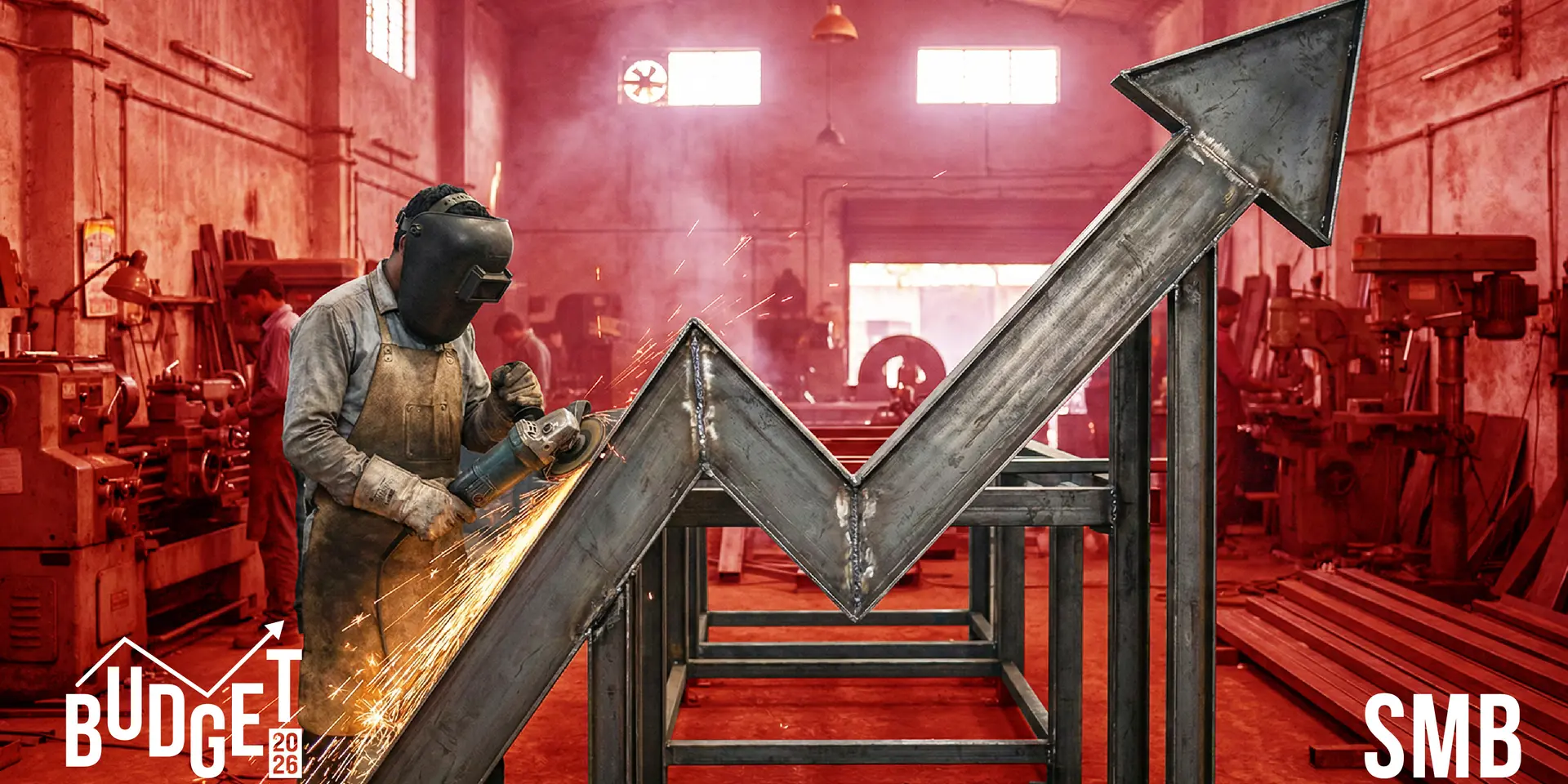

With Budget 2026 around the corner, manufacturing MSMEs across sectors—from power transmission and consumer durables to drones and home appliances, are striking a common note. They are not asking for flashy announcements or short-term incentives.
In fact, they want the government to fix bottlenecks that slow them down every day: weak infrastructure, delayed payments, high input costs, and policy timelines that do not match the realities of building manufacturing businesses in India.
While schemes like Make in India and Production Linked Incentive (PLI) have helped set the direction, MSMEs feel the next phase must focus on execution, predictability, and cash-flow stability.
SMBStory dives deeper into their ask:
Powering growth
For companies operating in power infrastructure, the Union Budget’s stance on transmission and distribution spending is critical.
Utsav Panchal, Director and CEO of Rajesh Power Services, points to this growing mis-match. “From an EPC perspective in the power transmission and distribution space, the most impactful policy change would be a stronger budget allocation for transmission and distribution infrastructure, aligned with India’s renewable energy targets,” he says.
While renewable capacity has expanded rapidly, transmission infrastructure has not kept pace. States such as Gujarat and Rajasthan are adding large renewable capacities, but evacuating that power reliably requires faster investments in substations, underground cabling, and high-capacity transmission lines.
Panchal also points to the need for continued support for undergrounding distribution infrastructure, especially in congested urban and semi-urban areas.
“Our experience shows that undergrounding has significantly reduced outages and downtime, leading to meaningful improvements in power reliability,” he says, adding that dedicated incentives for such projects would directly support manufacturing demand and capacity expansion.
Beyond physical infrastructure, he believes the next big opportunity lies in smart grid modernisation.
“A push towards smart grid modernisation, beyond consumer-level smart metering, would have a direct and positive impact on domestic manufacturing of advanced electrical and digital grid equipment,” he says.
Capital expenditure and GST clarity
On the manufacturing floor, the challenges are different but equally urgent. Kalpesh Ramoliya, Founder and Chairman at Raj Cooling Systems, says capital expenditure incentives must be sharper and more MSME-focused.
“There should be an increased focus on the incentives related to capital expenditure on MSME manufacturers, especially those who are investing in automation, energy-saving equipment, and backward integration,” he says.

GST remains another area of concern. Ramoliya calls for simplification of GST on components and raw materials used in consumer durables, saying it would directly help reduce production costs. He also flagged the need for better coordination between states and the Centre on industrial infrastructure, particularly plug-and-play industrial parks.
Rising input costs are adding further strain.
“An obvious effect of increasing metal, plastic, logistics, and energy costs could be seen in manufacturing margins,” Ramoliya says. He suggests easing customs duties on non-substitutable components, clearer input tax credit rules for capital equipment, and fewer GST disputes over rates. Incentives for renewable energy use at factories—through accelerated depreciation or energy credits, could also help manage long-term energy costs.
Biggest pain point: working capital
If there is one issue that cuts across sectors, it is access to affordable and predictable finance. Ramoliya says low-interest, long-term loans for plant and machinery upgrades would be “extremely helpful,” especially if supported through expanded credit guarantees under CGTMSE and interest subvention for the consumer durables sector.
“These will not directly help the manufacturer reduce costs, but will help the manufacturer manage the entire cycle of his product, starting from its procurement, which is the entirety of inventory management,” he adds.
The problem is even more acute in capital-intensive sectors such as drones.

Satyabrata Satapathy, Co-founder and CEO of BonV Aero, highlights the strain caused by long receivable cycles, especially in defence and PSU contracts.
“The single most impactful reform would be institutionalising faster and enforceable payment cycles for MSMEs supplying to government and large PSUs, backed by digital invoice tracking and automatic discounting mechanisms,” he explains.
“Predictable cash flows would unlock private capital, reduce dependence on subsidies, and allow manufacturing MSMEs to invest confidently in capacity, quality, and innovation over the long term.”
Beyond PLI
While industry leaders broadly agree that PLI has given manufacturing a push, many believe the next phase must focus on capability-building.
Satapathy of BonV Aero highlights the need for targeted R&D and capital support for advanced drone technologies such as autonomy, secure communications, and high-energy batteries.
“Beyond PLI, the sector needs refundable R&D tax credits for deeptech development, subsidies for testing, certification, and validation infrastructure,” he says, adding that export competitiveness also depends on support for global certification and compliance.
Ashutosh Gupta, Director of Sales and Marketing, Summercool Home Appliances, echoes the same thought.
He calls for expanded capital subsidies, tax benefits, and extended PLI-type support for plant modernisation to help manufacturers scale faster. “The rationalisation of GST along with the duties on imports of key raw materials and components is an anticipated scenario, as this would not only bring down production costs but also give better price competitiveness,” Gupta adds.
Skill development remains another gap. Both Gupta and Panchal emphasise the need for training programmes aligned with automation, digital systems, and next-generation manufacturing technologies.
Final word
Beyond money and financial incentives, MSMEs are asking for structural reforms that make day-to-day operations smoother. Faster vendor payments, simplified compliance, and reduced procedural burdens could have an outsized impact on growth.
“Payment delays are major cash-flow problems faced by MSME, affecting their investment capacity,” Ramoliya says.
“A robust system of guaranteed payment within a time frame, along with tracking options, would help in improving cash flows, instilling confidence in vendors, and ultimately developing a strong manufacturing sector,” he adds.
Gupta says that simplifying regulatory and compliance systems, like including labour laws and statutory filings, will allow MSMEs to focus on growth rather than paperwork.
As Budget day approaches, the message from manufacturing MSMEs is clear—fix the basics, ensure predictability, and align policy timelines with business realities. The growth, they argue, will automatically follow.
Edited by Megha Reddy